Flat Roof Vents (3 Types Ranked)

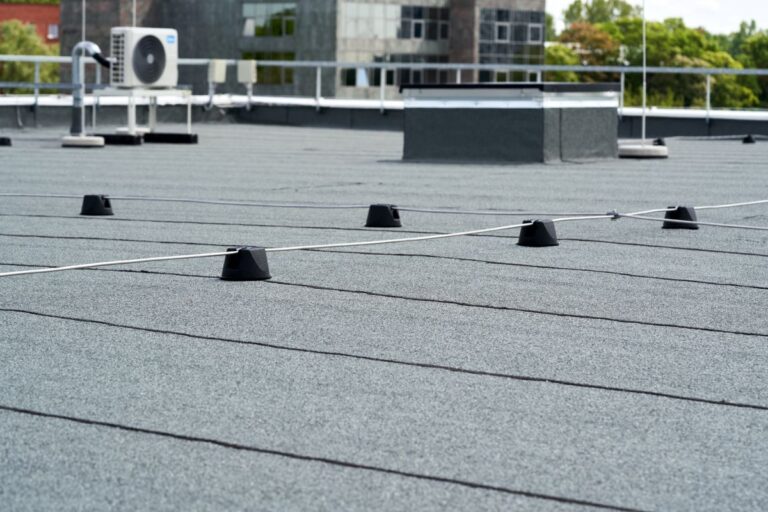
Ah, flat roofs—a sleek and modern architectural choice that’s gaining popularity among homeowners. But while flat roofs offer a contemporary aesthetic, they also present unique challenges when it comes to ventilation.
If you need a reputable commercial roofing company, reach out to Palladium right away. For now, here’s our two cents when it comes to maintaining your flat roofing system with proper roof ventilation.
Now, we have this guide on flat roof vents to inform you why proper ventilation is crucial for maintaining the integrity of your flat roof and preventing issues such as moisture buildup, mold growth, and premature deterioration. In this guide, we’ll explore three types of flat roof vents, ranked from best to worst, so you can make an informed decision for your home. Let’s ensure your flat roof stays cool, dry, and in top condition!
Inside this blog:
- The 3 key types of flat roof vents ranked in order from best to worst
- Detailed list of pros and cons for each type of flat roof vent
- Flat roof vents design & sizing Guidelines
- Climate-specific recommendations
Keep reading to learn more about the different types of flat roof vents, and which vent’s pros will outweigh its cons–according to your preferences!
🥇 Soffit Vents: Easy 1st Place Title
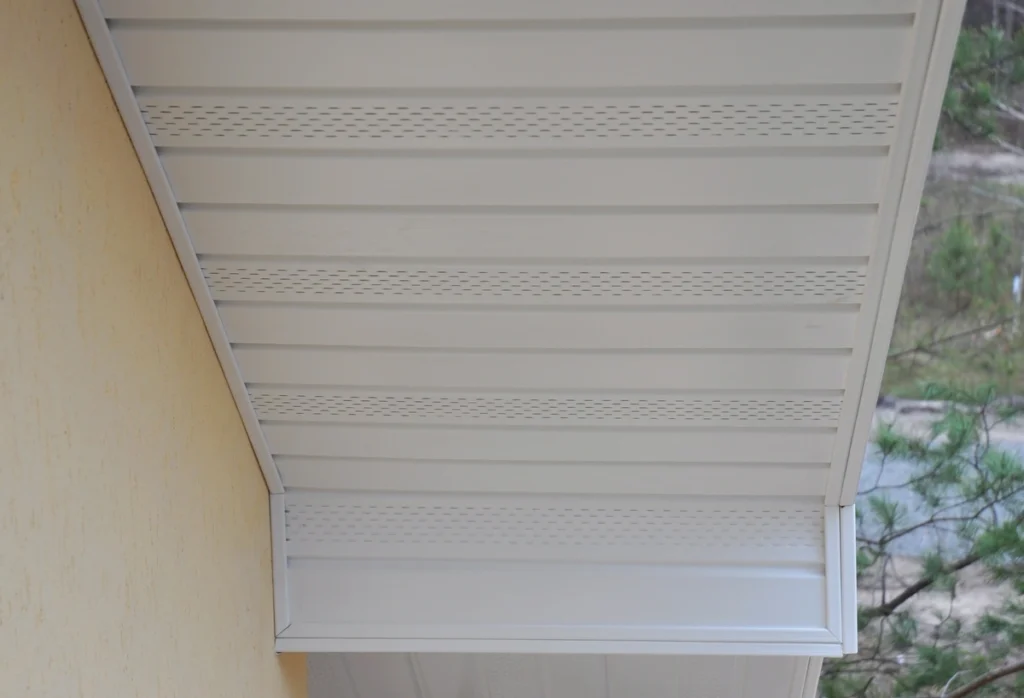
These vents are designed to promote airflow in your attic, keeping it cool and preventing moisture buildup. Soffit flat roof vents are a great addition to a flat roof’s ventilation system; especially if a box, mushroom or boot vent is used. This is because they assist in pushing hot air out naturally with cold air.
✔️Pros
- Soffit flat roof vents have an ability to improve your home’s energy efficiency by allowing fresh air to circulate through your attic and regulate temperature extremes.
- These flat roof vents reduce the strain on your HVAC system and, ultimately, can lower your energy bills.
- They promote proper flat roof ventilation and help keep humidity levels in check which protects your home from costly water damage.
✖️Cons
- One potential downside of soffit vents is that they can sometimes attract unwanted guests—critters. Birds, squirrels, and even pesky insects might see those vents as an invitation to crash at your place.
- The initial cost and installation process will require some time, effort, and potentially a bit of moolah.
- Soffit flat roof vents can also introduce the risk of water infiltration during heavy rain or snow, especially if not properly installed or maintained. This could potentially lead to water damage in your attic, undermining the very purpose of having vents in the first place.
If you’re dealing with water pooling, invasion, or the symptoms of roof water damage, get in touch with professional roofing contractors right away.
🥈 2. Roof Louvers: A Solid Runner-Up
Roof louvers, also known as box vents or static vents, are installed on the roof surface to allow hot air to escape. They feature a simple, passive design that relies on natural convection to facilitate airflow.
✔️Pros
- Roof louvers offer a versatile solution for flat roof ventilation, as they come in various sizes and styles to accommodate different roof configurations and aesthetics.
- These flat roof vents are durable and long-lasting, providing reliable ventilation for years without the need for frequent replacement.
- Roof louvers are resistant to damage from pests and weather elements, ensuring consistent airflow and ventilation even in harsh conditions.
✖️Cons
- In areas with high humidity or stagnant air, roof louvers may struggle to effectively remove moisture and prevent condensation buildup.
- Installation of roof louvers may require cutting into the roof surface, which can potentially compromise the integrity of the roofing material and increase the risk of leaks.
- Over time, roof louvers may become less effective due to wear and tear, requiring periodic maintenance to ensure optimal airflow and ventilation.
🥉 3. Turbine Vents: Bringing up the Rear
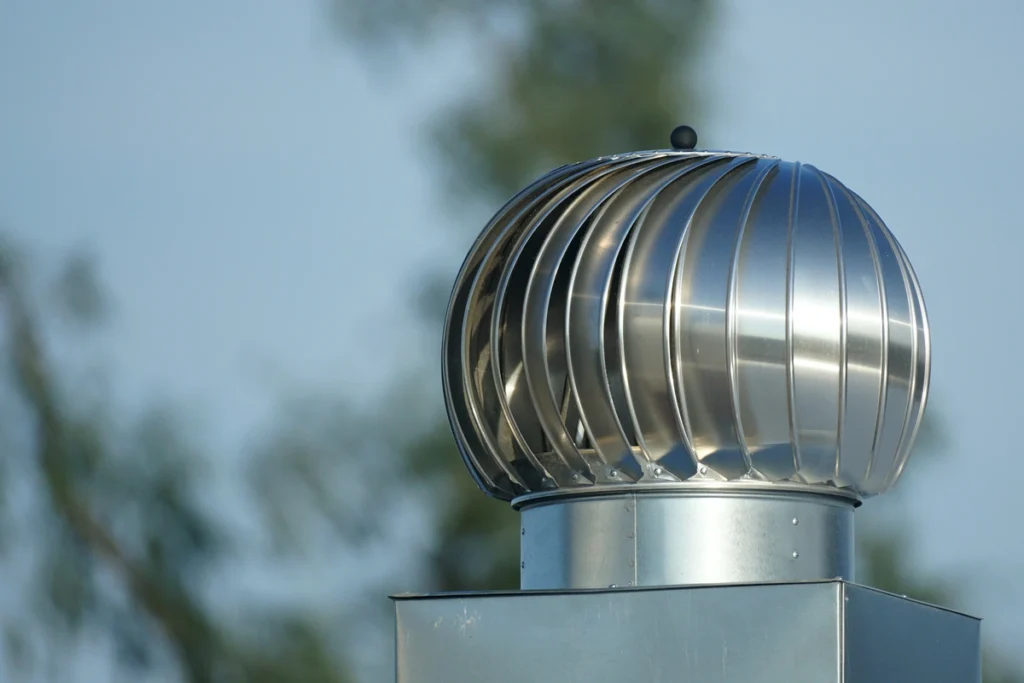
Turbine vents, also known as whirlybirds, are cylindrical vents installed on the roof surface that use wind power to draw hot air out of the attic space.
✔️Pros
- Turbine vents are lightweight and compact, making them easy to transport and handle during installation, even in hard-to-reach areas of the roof.
- These flat roof vents are resistant to weather elements such as rain and snow, ensuring reliable performance in various climatic conditions.
- Turbine vents can help extend the lifespan of roofing materials by reducing heat buildup in the attic space, thereby minimizing thermal stress and degradation.
✖️Cons
- Installation of turbine vents may require modifications to the roof surface, including cutting and sealing around the vent openings, which can be time-consuming and labor-intensive.
- Turbine vents may not be suitable for homes located in areas prone to extreme weather events such as hurricanes or tornadoes, as high winds can damage or dislodge the vents from the roof.
- Over time, turbine vents may experience wear and tear, leading to reduced efficiency and airflow. Regular maintenance, including lubrication and cleaning, is necessary to ensure optimal performance and longevity.
🧱 Flat Roof Ventilation Design & Sizing Guidelines
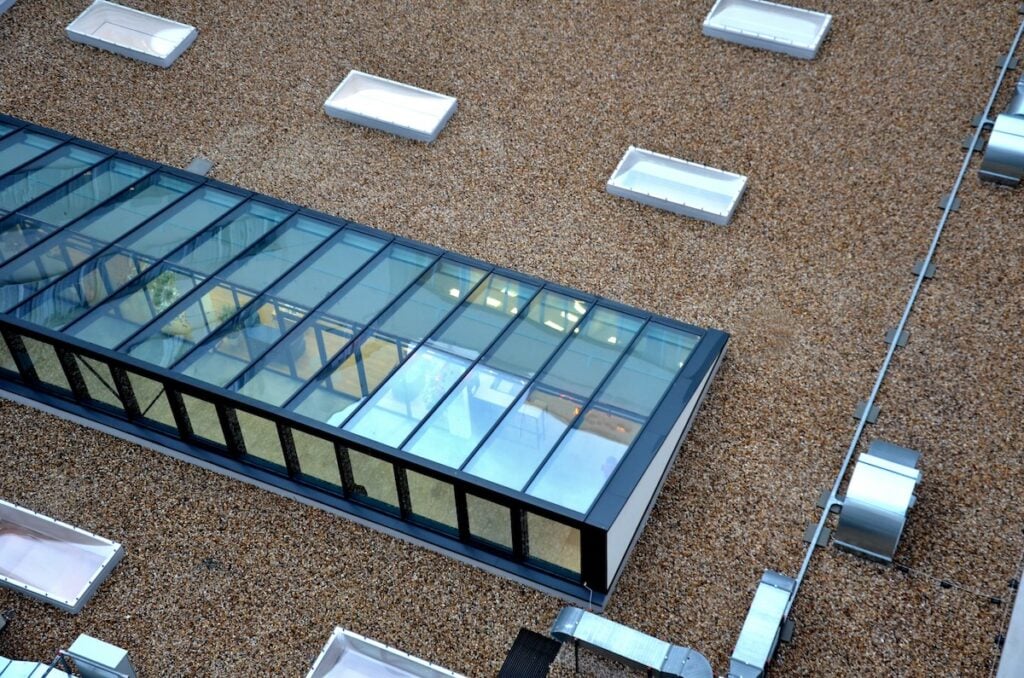
Flat roof vents aren’t a one-size-fits-all task — it requires careful balance between intake and exhaust airflow to prevent trapped moisture, roof blistering, and insulation damage. Because flat roofs have little to no slope, air movement is limited compared to pitched roofs. That means proper vent design and sizing are critical for long-term performance.
How Much Ventilation Do You Need?
Most roofing professionals — including the International Residential Code (IRC) — recommend 1 square foot of flat roof vents area for every 300 square feet of roof surface when both intake and exhaust vents are balanced. If your roof has little or no intake ventilation, double that ratio to 1 square foot per 150 square feet.
Example:
If your flat roof vents cover 1,200 sq. ft., you’ll need approximately four sq. ft. of total vent area — ideally, two sq. ft. of intake and two sq. ft. of exhaust.
| Roof Area | Ventilation Ratio | Total Vent Area | Intake | Exhaust |
|---|---|---|---|---|
| 600 sq ft | 1:300 | 2 sq ft | 1 sq ft | 1 sq ft |
| 1200 sq ft | 1:300 | 4 sq ft | 2 sq ft | 2 sq ft |
| 1800 sq ft | 1:300 | 6 sq ft | 3 sq ft | 3 sq ft |
Design Tips for Proper Airflow
- Balance matters: Always aim for a 50/50 split between intake and exhaust to maintain steady air circulation.
- Vent placement: Position exhaust vents toward the roof’s high points or near mechanical penthouses; locate intakes along soffits or roof edges.
- Avoid short-circuiting: Don’t place exhaust and intake flat roof vents too close together — it reduces crossflow.
- Include vapor barriers: In humid areas, install a vapor retarder beneath insulation to reduce condensation risk.
- Use baffles or raised curbs: These help prevent wind-driven rain or snow from entering the vent openings.
🌦️ Climate-Specific Recommendations

Oklahoma’s weather can swing from high winds and hail to humid summers and ice buildup in winter — all of which stress a flat roof’s ventilation system. Matching the vent type to your climate ensures better durability and performance.
1. Hot & Humid Climates
Challenge: Excess moisture in the air can condense inside the roof deck, leading to mold, leaks, and shortened roof life.
Recommendation:
- Use low-profile static or louver vents that resist wind-driven rain.
- Combine with continuous soffit flat roof vents or perimeter intake vents for balanced airflow.
- Apply a vapor barrier under the insulation to prevent internal condensation.
- Add light-colored or reflective membranes (like white TPO) to minimize heat gain.
Example: In humid regions of Oklahoma City, we’ve seen 15–20°F cooler attic temperatures when soffit vents were paired with properly spaced static vents.
2. Cold or Mixed Climates
Challenge: Condensation and freeze-thaw cycles can damage insulation and seams.
Recommendation:
- Choose non-mechanical, weather-sealed vents such as box or mushroom vents.
- Ensure proper insulation continuity so that warm indoor air doesn’t condense under the membrane.
- Maintain a vapor retarder between the deck and insulation layers.
- Inspect vents every fall to ensure snow guards and seals are intact.
3. High-Wind or Storm-Prone Areas
Challenge: Tornado-season gusts and severe thunderstorms can dislodge turbines or blow rain into openings.
Recommendation:
- Avoid traditional turbine vents unless rated for hurricane-force winds.
- Opt for wind-resistant, low-profile vents tested to ASTM D3161 or UL 2218 impact standards.
- Use curb-mounted vents with internal baffles and waterproof flashing kits.
- Conduct semi-annual inspections after heavy storms.
🧰 Expert Note: In Oklahoma’s high-wind zones, Palladium Roofing installs roof louvers with built-in baffles and edge curbs that resist uplift pressures up to 90 mph — a safer alternative to spinning turbines.
✅ Summary Table: Recommended Vents by Climate
| Climate Type | Best Vent Options | Avoid | Extra Tips |
|---|---|---|---|
| Hot & Humid | Soffit + Static | Unsealed turbines | Add vapor barrier & reflective coating |
| Cold / Mixed | Box / Mushroom | Uninsulated vents | Inspect seals before winter |
| High Wind | Low-profile louver | Standard turbines | Use wind-rated vents with baffles |
Choose Wisely for Optimal Flat Roof Ventilation
When it comes to flat roof ventilation, the type of vent you choose can have a significant impact on the effectiveness and longevity of your roof. Soffit flat roof vents stand out as the top choice for efficient ventilation, while roof louvers offer a cost-effective alternative for flat roof ventilation–although they may not provide as efficient airflow as soffit vents. Turbine vents, while budget-friendly, may be less reliable in areas with low wind or inconsistent airflow, and they require regular maintenance to ensure optimal performance.
Ultimately, the best type of flat roof vents for your home will depend on factors such as roof design, climate, and budget. By carefully weighing the pros and cons of each option, you can make an informed decision and ensure your flat roof remains cool, dry, and well-ventilated for years to come.
Contact our professional contractors at Palladium Roofing today for quick turnaround times and reliable industry warranties for your next project. We can’t wait to get started on bringing your vision to life!
Related Articles