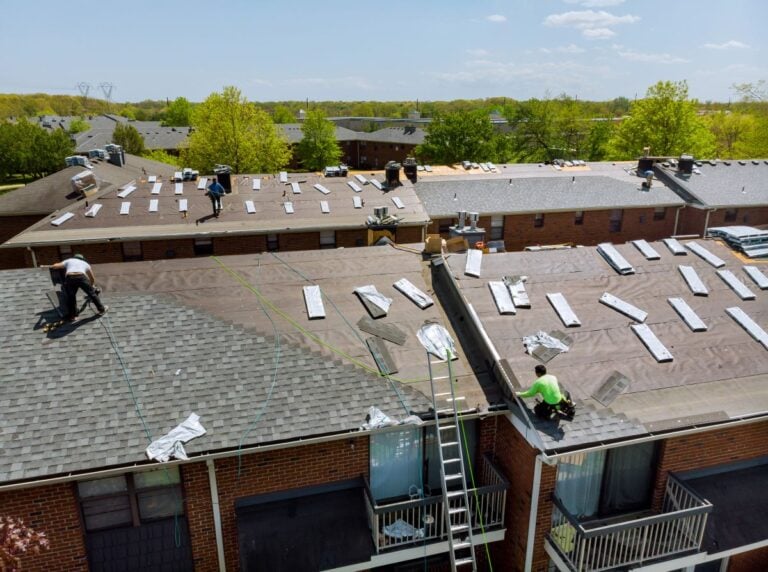

How Can I Tell If My Roof Has Storm Damage In Mustang, OK?
After a severe storm rolls through, your home might look perfectly fine from the street. Yet one of the most common questions we hear from local homeowners is “how can I tell if my roof has storm damage in mustang ok” — and it is a smart one to ask, because damage that goes undetected often leads to leaks, structural deterioration, and costly repairs down the road. If you want to protect your home and stay ahead of potential problems, exploring your roofing options with a trusted local contractor is a smart first step.
What you’ll learn:
- The most common signs of storm damage on residential roofs
- How to safely inspect your roof after a storm
- What types of storms cause the most damage in Mustang and surrounding areas
- When to call a professional versus attempting DIY assessment
- How hail, wind, and debris each leave distinct evidence on your roof
- Why prompt action protects your home and your insurance claim
Why Roof Storm Damage Should Never Be Ignored
Many homeowners in Mustang and surrounding areas assume that if their roof isn’t actively leaking, everything is fine. Unfortunately, that assumption can lead to some of the most expensive repairs a homeowner will ever face. Storm damage is often subtle at first, working its way through layers of roofing material over weeks or months before it shows up as a visible interior problem.
Acting quickly after a storm is not just about fixing what is broken. It is about protecting your home’s insulation, decking, and structural integrity before water infiltration has a chance to do its worst. Insurance companies also have strict timelines for filing storm-related claims, and waiting too long to report damage can result in a denied claim even when the damage is legitimate.
- Financial protection: Catching damage early means smaller repair bills and a stronger position when working with your insurance provider.
- Structural preservation: Water that gets under compromised shingles can rot wood decking and weaken rafters within a single season.
- Interior safety: Mold and mildew begin developing within 24 to 48 hours of moisture intrusion, posing real health risks to your family.
- Home value maintenance: A roof in poor condition directly reduces your property’s market value and can complicate future home sales.
Ignoring storm damage is almost never the cheaper option in the long run. The cost of a professional inspection is minimal compared to the expense of replacing interior ceilings, insulation, and structural framing caused by water damage that went unaddressed.
7 Signs Your Roof Has Storm Damage
After a storm passes through Mustang and surrounding areas, it is natural to want to check for damage right away. Before you head outside or attempt to access your roof, make sure conditions are safe. Never climb onto a wet or slippery surface, and use binoculars from the ground when possible to get a preliminary look before anything else.
1. Missing or Displaced Shingles
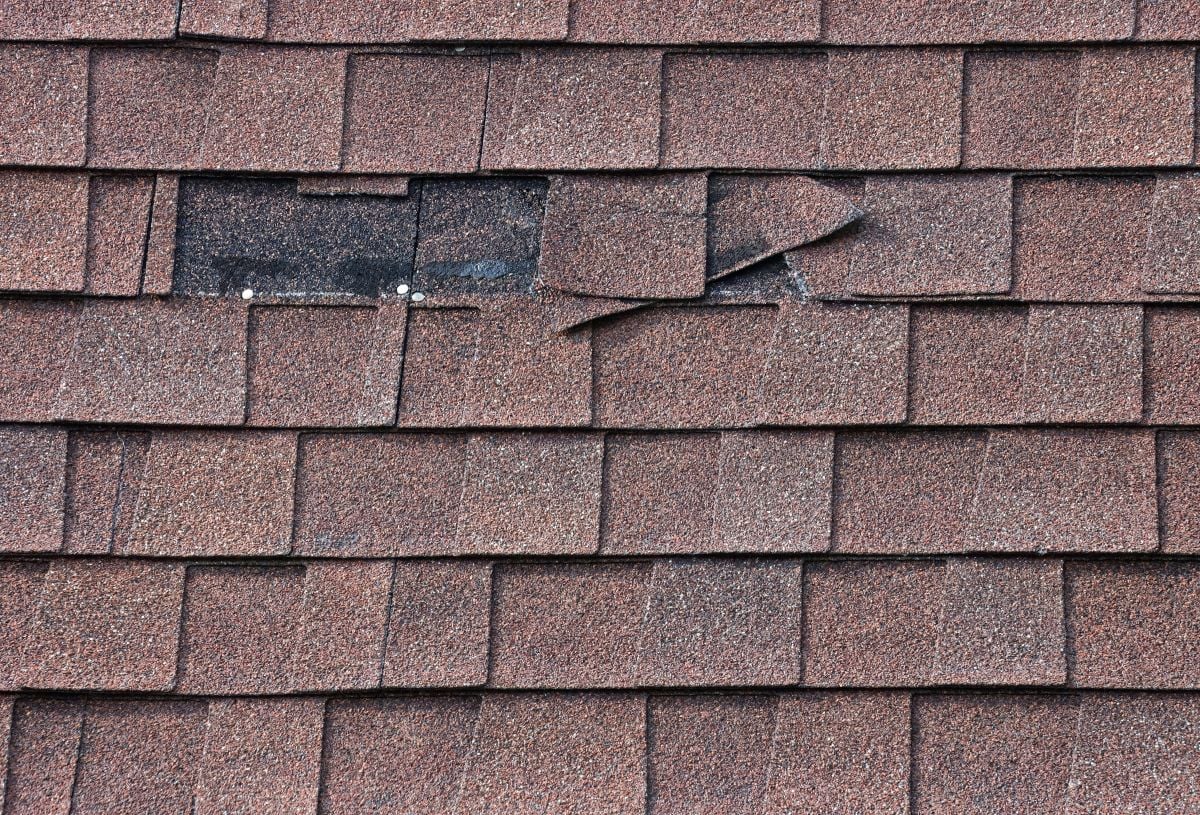
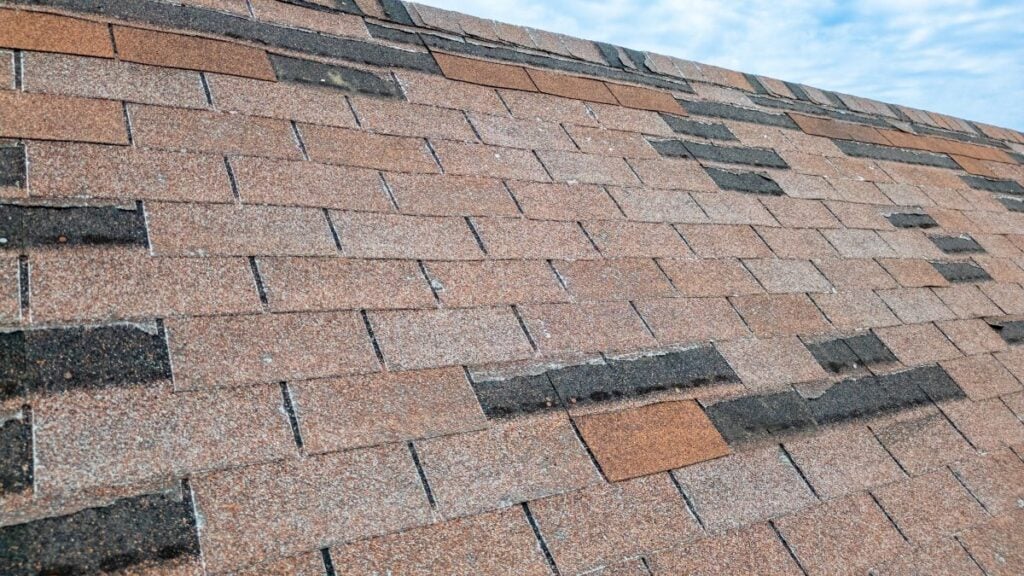
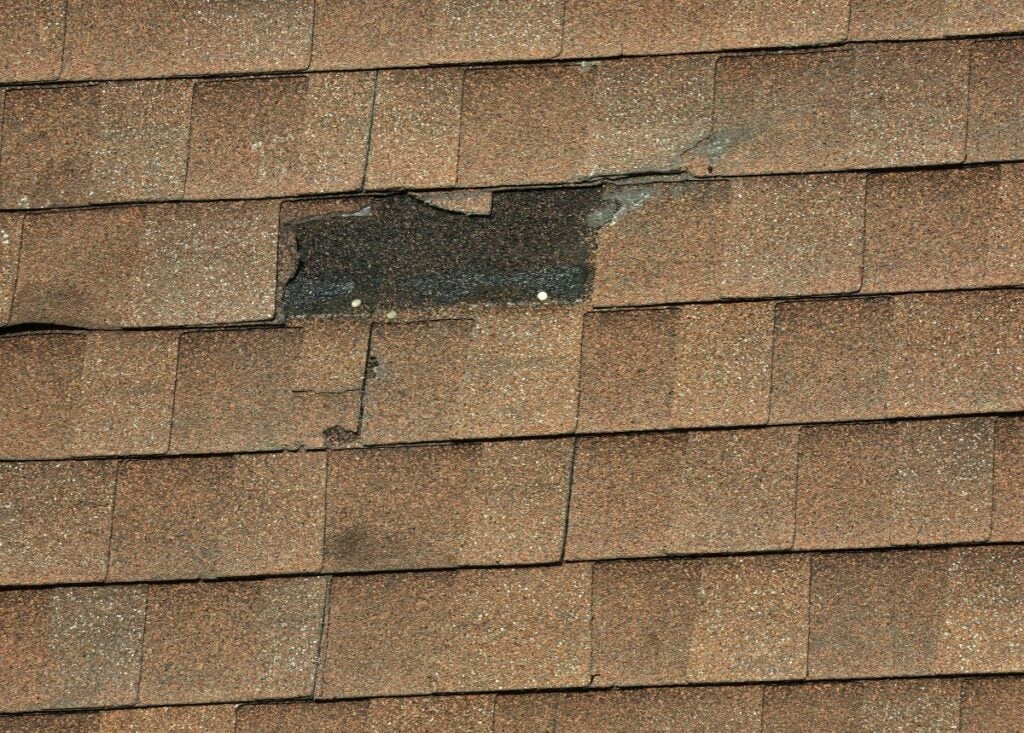
One of the most visible signs of storm damage is shingles that have been completely blown off or shifted out of alignment. High winds can lift shingles that were already weakened by age or previous weather events, leaving sections of your roof deck exposed to the elements. Even one or two missing shingles create an entry point for water and should be addressed without delay.
- Look for bare patches or areas where the darker underlayment is visible
- Check your yard and gutters for shingle fragments after a storm
- Note any shingles that appear lifted at the edges even if they have not fallen off completely
2. Hail Damage on Shingles and Gutters
Hail is one of the most common causes of roof damage in Oklahoma, and it can be difficult to detect without knowing what to look for. On asphalt shingles, hail strikes leave circular impact marks that knock loose the protective granules embedded in the surface. Over time, those granule-stripped spots become weak points where the shingle material degrades faster.
- Check your gutters and downspouts for an unusual accumulation of granules after a storm
- Look for dents or dings on metal components like gutters, flashing, vents, and skylights
- Inspect soft metals like aluminum fascia for impact indentations, which can confirm hail size and severity
3. Cracked or Bruised Shingles
Not all storm damage is immediately obvious. Wind can flex shingles beyond their tolerance, causing hairline cracks that are not visible from a distance. Hail strikes can also leave bruising beneath the surface, where the shingle mat has been fractured but the surface looks relatively intact. Running your hand firmly across a shingle can sometimes reveal soft spots or cracks that the eye misses.
4. Damaged or Lifted Flashing
Flashing is the metal material installed around chimneys, skylights, vents, and roof valleys to prevent water from seeping into joints and seams. Storm winds can pry flashing loose or bend it away from the surface it was sealing. Even a small gap in flashing can allow significant water intrusion, especially during heavy rain.
- Look for flashing that appears bent, pulled away, or rusted along its edges
- Check the seams where flashing meets chimney brick or siding for gaps or cracks in caulking
- Be especially attentive to valley flashing, which handles the highest volume of water runoff on your roof
5. Granule Loss and Bare Spots
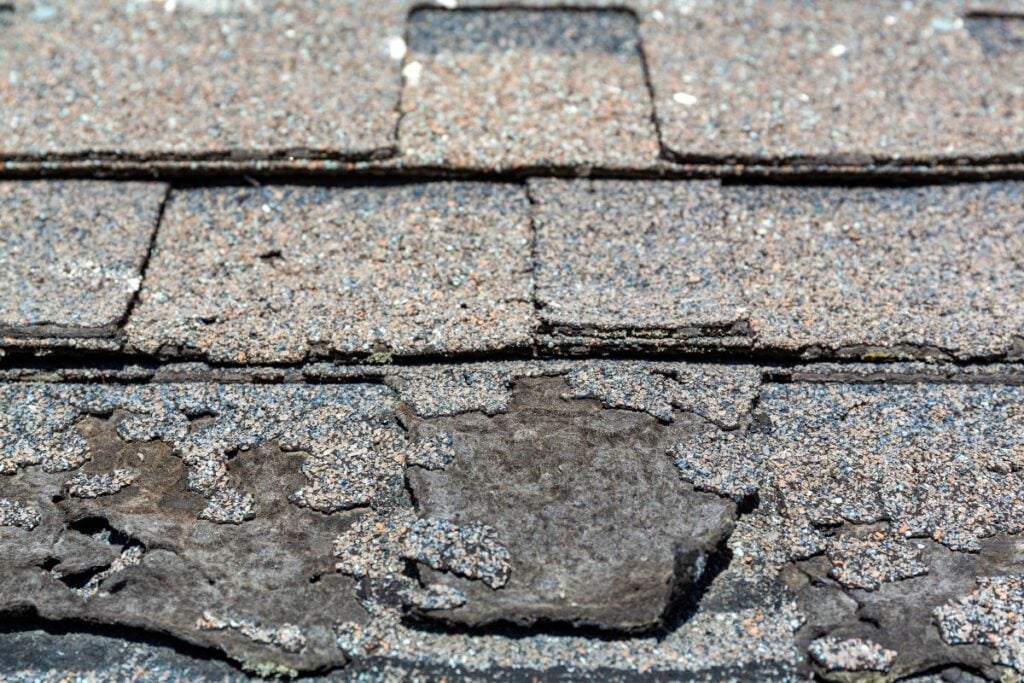
As mentioned in the hail section, granule loss is a strong indicator of storm damage. But it can also accumulate gradually over multiple weather events without any single dramatic storm being the cause. If you notice your gutters filling with gritty, sand-like material every time it rains, your shingles are losing protective granules at an accelerated rate.
- Bare spots appear lighter in color than the surrounding shingles
- Excessive granule loss shortens the effective lifespan of asphalt shingles significantly
- Areas where granules have been stripped are more vulnerable to UV damage and cracking
6. Sagging or Water-Stained Ceiling Areas
Sometimes the first sign of roof damage appears inside your home rather than outside. Water stains on ceilings or walls, bubbling paint near the roofline, or soft spots in drywall can all indicate that moisture is entering through a compromised roof. These interior signs often mean the damage has been present long enough for water to work its way through multiple layers.
7. Debris Impact Damage
Heavy storms often carry tree branches, large hail, or airborne debris that can physically strike the roof surface with considerable force. Even branches that land gently can scrape off protective granules as they slide down the slope. Look for areas where surface material appears gouged, scraped, or punctured, particularly after a storm that included high winds.
- Check areas near overhanging trees especially carefully
- Even small punctures can allow water infiltration
- Debris impact near flashing or ridge caps can compromise those already-vulnerable zones
No matter what combination of storm conditions you faced, each of these seven signs warrants attention rather than assumption. Documenting what you observe after a storm puts you in the strongest position when speaking with your insurance company and your roofing contractor.
How to Safely Conduct a Post-Storm Roof Assessment
Knowing what to look for is only useful if you know how to look safely. A ground-level inspection is always the best starting point and can reveal most major forms of storm damage without requiring you to climb anything. The following approach allows homeowners in Mustang, Oklahoma City, and surrounding areas to gather useful information before contacting a professional.
Start with a Ground-Level Walk-Around
Use binoculars to scan the full perimeter of your roofline from multiple angles. Walk the entire perimeter of your home rather than checking from one vantage point. Changes in roofline shape, missing shingles, or visibly damaged ridgeline are often apparent from ground level with a careful look.
Inspect Gutters and Downspouts
Your gutters collect a lot of evidence about what happened on your roof during a storm. Excessive granules, shingle fragments, or debris accumulation can help you confirm the extent of surface damage without ever leaving the ground. Dented gutters also indicate the size and intensity of any hail that fell.
Check the Attic
If you can safely access your attic, look for daylight coming through the roof deck, dark staining on the wood, or any signs of moisture or dripping. The attic is often the first interior space to show evidence of a roof breach, and catching it there before it reaches the ceiling below saves considerably on repair costs.
Document Everything
Before any repairs are made, take detailed photographs of all damage you observe both inside and outside the home. Date-stamped photos and a written record support your insurance claim and help the roofing contractor understand the full scope of what needs to be addressed.
Understanding What Oklahoma Storms Do to Roofs
Oklahoma’s climate brings a particularly challenging mix of weather events throughout the year, and Mustang, Yukon, and surrounding areas sit squarely in one of the most storm-active corridors in the country. Understanding how each storm type affects roofing materials helps you know where to focus your inspection.
| Storm Type | Primary Damage | What to Look For |
| Hail | Granule loss, shingle bruising | Circular impact marks, gutter granules, dented gutters |
| High Wind | Missing shingles, lifted flashing | Bare patches, lifted edges, shifted ridge caps |
| Heavy Rain | Water infiltration, leaks | Ceiling stains, attic moisture, pooling near downspouts |
| Ice and Snow | Ice damming, weight stress | Sagging, interior leaks near eaves, cracked shingles |
| Tornado or Debris | Physical puncture, structural damage | Gouged surfaces, punctures, fallen debris on roof |
Oklahoma’s severe weather season peaks in spring and early fall, but damaging storms can occur in any month. Having your roof inspected annually, and after every major storm event, is one of the simplest ways to protect your investment.
When to Call a Professional Roofer
A ground-level inspection is a helpful starting point, but it is no substitute for a trained eye. Professional roofers carry the experience and equipment to catch damage that is not visible from below, and they document findings in a way that holds up with your insurance provider. If you have noticed any of the signs described above, or a significant storm has recently moved through the area, Palladium Roofing is ready to help. We serve homeowners throughout Mustang and surrounding areas with thorough inspections and honest assessments, so do not let a small problem grow into a major expense. Contact us today to schedule your post-storm roof inspection.