
How Much Hail Damage to Replace Roof? (3 Factors)
After a hailstorm rolls through, most homeowners are left staring at their roof from the ground, unsure whether the damage they can see is enough to justify a claim. Understanding how much hail damage to replace roof actually requires can save you from either underreporting real damage or assuming a repair is enough when it is not. Before you decide, it helps to understand what a professional roof assessment actually measures and why insurers rely on it so heavily.
What you’ll learn:
- How insurance adjusters actually measure hail damage
- The hits-per-square threshold that often decides repair versus replacement
- Which damage checks you can safely do yourself and which require a professional
- How repair and full replacement outcomes compare side by side
- What to do next if your roof falls into a gray area
Why This Threshold Matters So Much
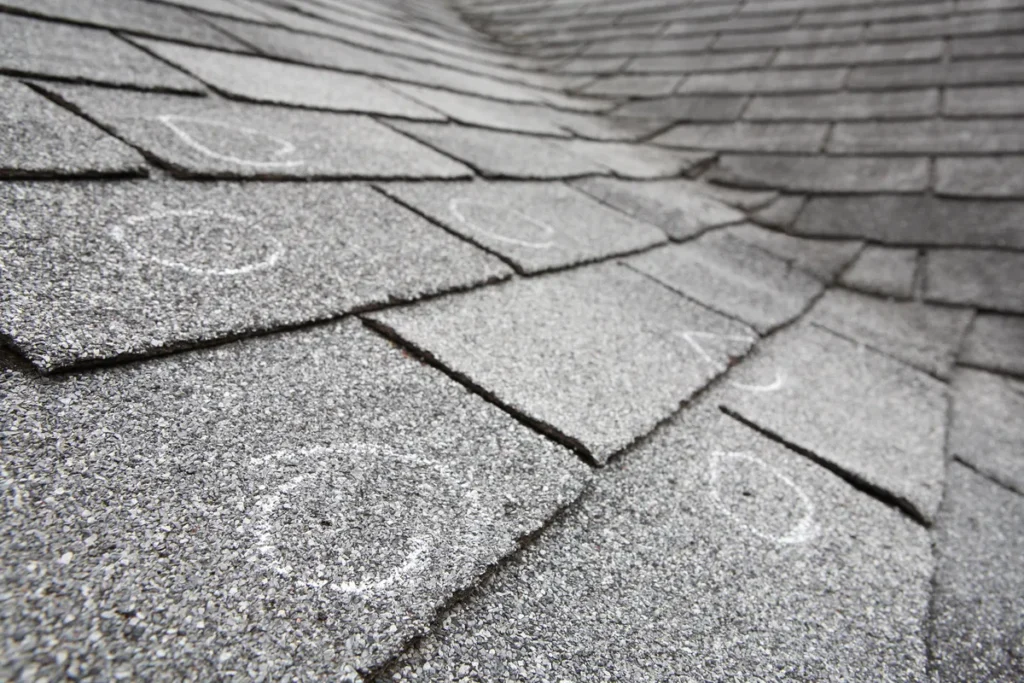
Most insurance adjusters consider a roof a replacement candidate once hail damage affects roughly 8 or more impact points within a 10 foot by 10 foot test square, or spans more than 25 percent of a single roof plane. Lighter, more scattered damage typically qualifies for a targeted repair instead of a full tear-off, which is why the exact density and pattern of the hits matters more than simply how many storms have rolled through this season.
Knowing where your roof falls on that scale before you file a claim in Edmond and surrounding areas changes how the entire process unfolds. Here is why it matters so much:
- Accurate claims: Understanding the threshold helps you avoid underselling real damage or overstating minor cosmetic marks.
- Faster approvals: Adjusters move more efficiently when a homeowner already understands how density is measured.
- Avoiding disputes: A clear grasp of the standard reduces the odds of a denial or a lowball repair-only offer.
- Long-term roof performance: Catching functional damage early prevents small issues from becoming leaks inside your home months later.
It also helps to understand how the payout itself works once a claim is approved. Homeowners usually pay only their policy deductible after an approved claim, though Replacement Cost Value and Actual Cash Value coverage alter your out-of-pocket expenses differently, since Actual Cash Value policies deduct depreciation from the payout. Most insurance policies also require claims to be filed within 6 to 12 months of the storm, so acting sooner protects your ability to file at all.
None of this requires becoming a roofing expert. It simply means understanding how insurers actually evaluate hail damage, which the next section breaks down more precisely. If your roof was hit and you plan to file, our guide on documenting and filing a storm damage insurance claim walks through the paperwork side of the process in more depth.
3 Factors Insurers Use To Measure Hail Damage
Insurance adjusters do not simply eyeball a roof and guess. They apply a fairly consistent set of criteria to decide whether hail damage warrants a repair or a full replacement, and understanding these factors helps homeowners in Edmond and surrounding areas know what to expect before an adjuster ever climbs a ladder to take a closer look.
1. Damage Density Per Test Square
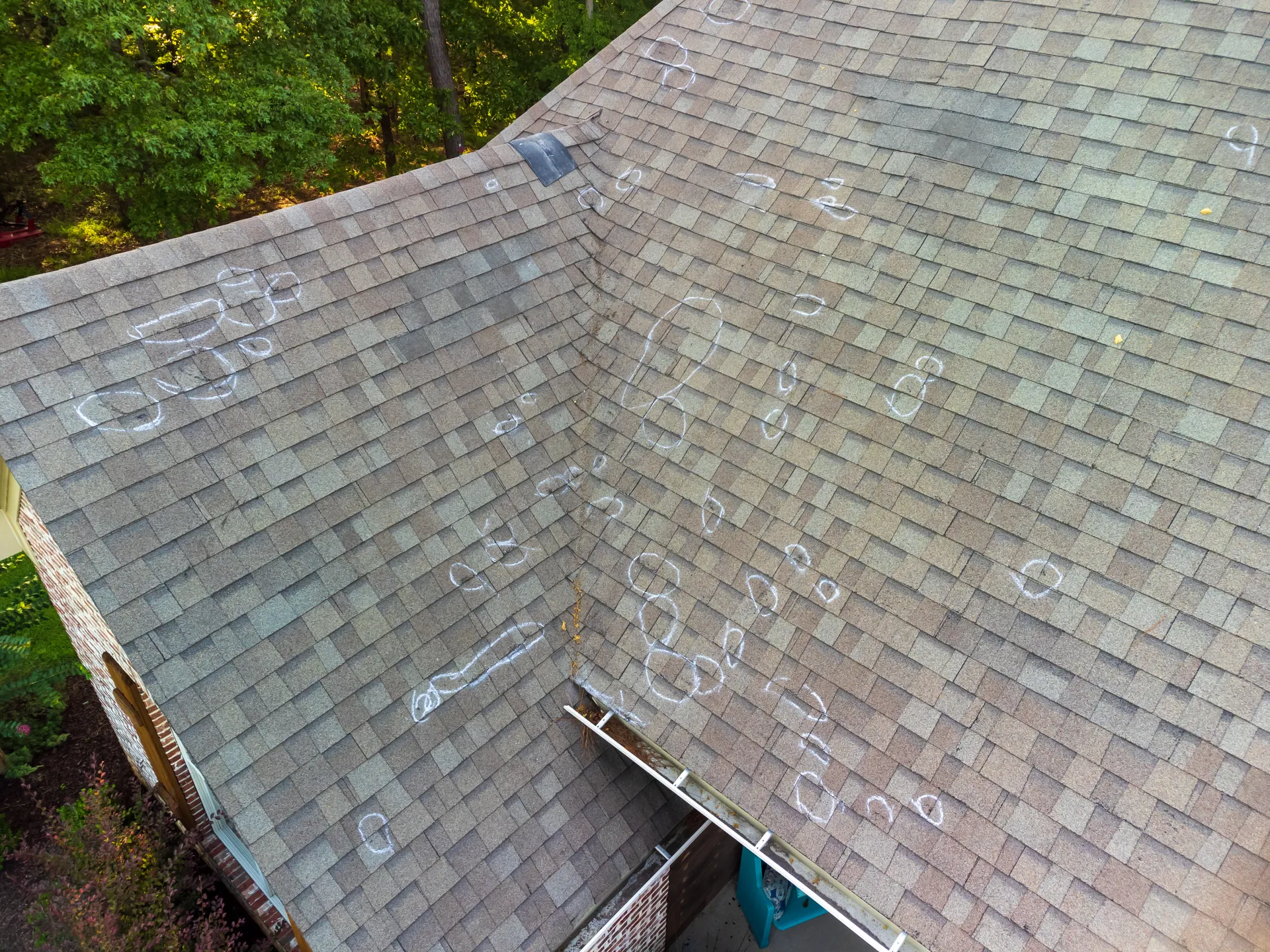
Adjusters typically mark out a 10 foot by 10 foot section of roof and count every hail impact within it. A high concentration of hits in that small area carries far more weight than the same number of hits scattered across the entire roof, since concentrated damage is far more likely to compromise the roof’s overall performance.
- A dense cluster of impacts in one test square often signals a compromised section of shingles
- Adjusters usually repeat this test in multiple areas of the roof to confirm the pattern is consistent
- Isolated hits outside the test squares are noted but weighted less heavily in the final decision
2. Functional Versus Cosmetic Damage
Not every hail mark affects performance. Functional damage compromises the shingle’s ability to shed water and protect the roof deck, while cosmetic damage only affects appearance without meaningfully reducing durability or lifespan. Hail size plays a role too. Hail below 0.75 inches rarely causes functional damage, hailstones larger than 1 inch can damage asphalt shingles significantly, golf ball sized hail around 1.75 inches causes fairly consistent damage across most roofing materials, and baseball sized hail near 2.75 inches typically qualifies a roof for replacement outright.
- Cracked shingles, exposed fiberglass, and bruising that has broken the shingle’s seal count as functional
- Surface dents that have not broken through the granule layer are usually classified as cosmetic
- Cosmetic-only damage is far more likely to result in a denied claim or a repair-only offer from the insurer, and cosmetic damage exclusion clauses have become increasingly common in newer insurance policies
3. Roof Age And Remaining Lifespan
The same storm that only warrants a repair on a newer roof can trigger a full replacement recommendation on an older one. Aging shingles have already lost some flexibility and granule coverage, so the same hail impact does more relative damage to a roof that is closer to the end of its expected service life.
A roof approaching the back half of its expected lifespan is judged differently than one installed just a few years ago, even when the visible hail pattern looks similar. Taken together, these three factors explain why two homes hit by the same storm can receive very different claim outcomes, and why a professional inspection carries far more weight than a homeowner’s visual guess from the yard.
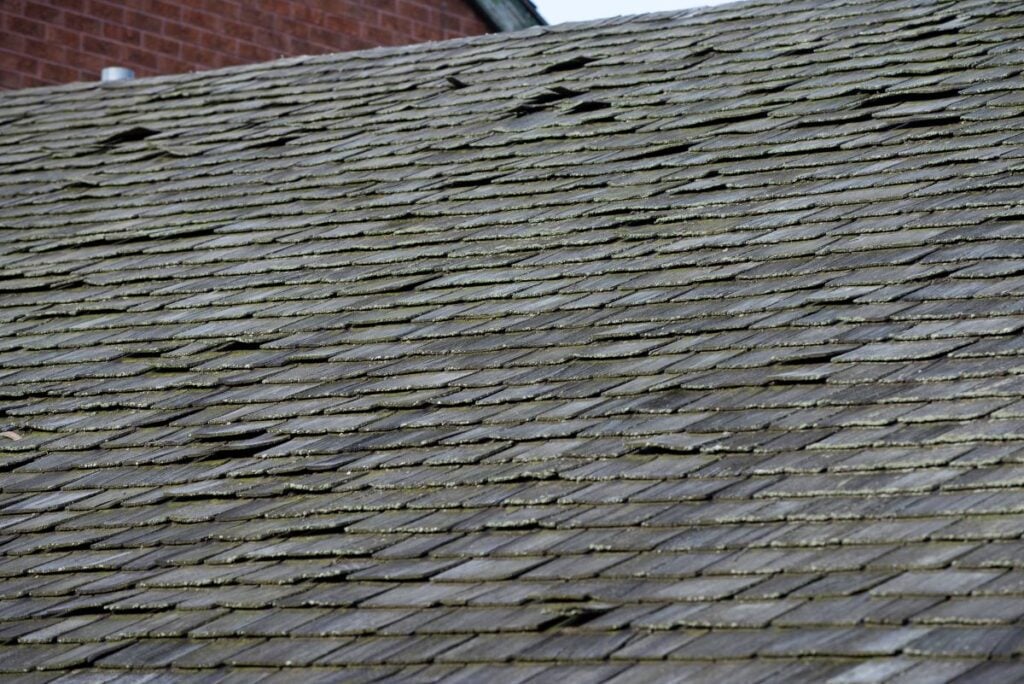
The Hits-Per-Square Threshold Adjusters Use
Once you understand that density matters more than total hit count, the next step is knowing exactly where that threshold typically sits. Insurance adjusters generally look for somewhere between 7 and 10 functional impact marks within a single 10 foot by 10 foot test square before recommending a full roof replacement rather than a repair, and this number tends to hold fairly consistent across most storm-prone regions.
Some checks for hail damage are safe for any homeowner to do from the ground, while others genuinely require a trained professional on the roof itself. Knowing the difference keeps you safe while still giving you a rough sense of severity before a formal inspection ever happens.
- DIY-safe checks: Look at your gutters and downspouts for granules washed off the shingles, check soft metals like window screens and vents for distinct hail damage marks, and inspect your car or outdoor furniture for dents as a rough indicator of storm severity.
- Professional-only checks: Marking out actual test squares on the roof surface, counting functional impact marks, and checking both internal water stains and external signs of hidden damage all require someone trained to safely walk the roof.
Get a professional hail damage count before you file. Scheduling an inspection before you call your insurer means you walk into the claims process with real numbers instead of a guess, which strengthens your position from the very first conversation.
Homeowners who understand this threshold going into an inspection tend to have far more productive conversations with both their contractor and their adjuster. It removes the guesswork from what could otherwise feel like an arbitrary decision handed down after a brief walk around the roof.
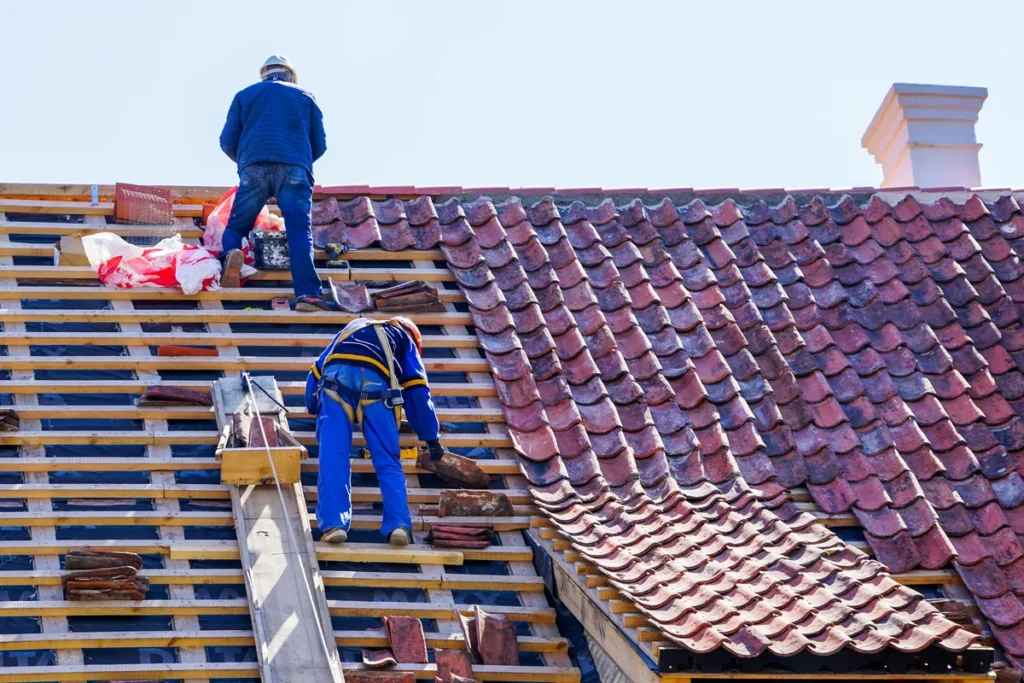
Repair Versus Full Replacement
Once the density and functional damage assessment is complete, the outcome usually falls into one of a few predictable categories. Seeing these side by side makes it easier to understand what a given inspection result actually means for your roof and what kind of conversation to expect with your insurer next.
| Damage Density Found | Likely Insurer Decision | What Typically Happens Next |
| Fewer than 7 functional hits per test square | Repair only | Damaged shingles are replaced individually or by section |
| 7 to 10 functional hits per test square | Borderline, often full replacement | Insurer may request a second inspection before deciding |
| More than 10 functional hits, or damage on 25% or more of a plane | Full replacement | Entire roof slope or full roof is scheduled for replacement |
A result in the middle range is often where disputes happen most, since a homeowner’s contractor and the insurer’s adjuster can reasonably disagree about a handful of borderline marks near the edge of the threshold. If your estimate comes back lower than expected despite a strong hit count, our guide on how to get insurance to pay for a full roof replacement covers how to push back with additional documentation. A full tear-off also lets roofing professionals check for rotted decking or compromised underlayment before new shingles go down.
Repair and replacement costs vary based on several factors beyond the hail damage itself:
- Roof size: Determines how much material and labor the project requires
- Roof pitch and complexity: Affects labor safety requirements and waste percentages
- Damage spread: Widespread damage across multiple slopes raises both labor and material needs
- Local building codes: May require attic ventilation upgrades during a full replacement, adding to the total cost
On average, repair costs for hail damage run around $4,250, though total repair costs can range from $1,000 to $32,500 depending on the extent of the damage. Insurance payouts for a full hail claim often land between $9,000 and $15,000.
Material choice affects both the repair bill and how well shingles hold up against the next storm:
- Asphalt shingles: The most cost-effective material to replace
- Metal roofing: Runs $925 to $1,900 per square and does not shatter or crack under hail impact
- Clay or concrete tile: Runs $750 to $1,300 per square
- Class 4 impact-rated composite and stone-coated steel: Provide strong resistance against future hail
Homeowners facing a total roof replacement often use the opportunity to upgrade to impact resistant shingles or 30-year laminated shingles for added long term protection. Understanding which category your roof likely falls into before the adjuster arrives helps you set realistic expectations and recognize quickly whether a settlement actually reflects the damage that was found.
Get A Clear Answer Before You File
Knowing how much hail damage it actually takes to justify a full roof replacement takes the guesswork out of a stressful situation. Whether your roof shows a handful of scattered marks or a dense cluster of functional damage, understanding the threshold helps you approach your insurance company with confidence instead of uncertainty. Palladium Roofing provides homeowners throughout Edmond and surrounding areas with detailed, HAAG-certified inspections that document exactly how many functional impacts your roof sustained and where they fall relative to industry thresholds, so you have real numbers to work with rather than a guess from the ground.
If a recent hailstorm has you wondering whether your roof needs a repair or a full replacement, do not guess from the ground. A professional count of functional impacts gives you the same information your adjuster will be looking for. Contact us today to schedule a professional hail damage inspection and get a clear answer before you file your claim.
Related Articles